
Coming out once is hard. Coming out twice? That’s a whole other kind of courage. For many people, especially those who are transgender, nonbinary, or genderfluid, there isn’t just one moment of truth - there are two. The first is often about sexual orientation: ‘I’m gay.’ The second is about gender identity: ‘I’m not who you think I am.’ These aren’t steps on a checklist. They’re two separate lifetimes lived under different masks, and each one demands a new kind of bravery.
Some people come out as gay in their teens, only to realize years later that their gender doesn’t match the body they were born with. Others hide their gender identity for decades, fearing rejection, until they finally say, ‘I’m trans,’ and then have to come out again as someone who is also queer. It’s not linear. It’s not neat. And it’s rarely celebrated in the way straight coming-out stories are. If you’re looking for stories of people navigating complex identities in big cities, you might stumble across london escort girl reviews - not because they’re about identity, but because they’re about visibility in places where people learn to survive by being seen, even if only for a moment.
Why Two Outs?
Most people assume that once you say you’re gay, lesbian, or bisexual, you’ve said everything there is to say about who you are. But gender and sexuality are not the same thing. One is about who you love. The other is about who you are. A gay man can be cisgender. A lesbian woman can be trans. A bisexual person can be nonbinary. These identities overlap, but they don’t depend on each other.
When someone comes out as gay, their family might accept them - maybe even celebrate it. But when they later come out as trans, that same family might shut down. Why? Because gender identity challenges deeper assumptions. Sexual orientation feels like a choice of partner. Gender identity feels like a challenge to reality itself.
That’s why the second coming out is often lonelier. You’ve already lost some people. You’ve already grieved the version of yourself you had to hide. Now you have to do it again - with new names, new pronouns, new expectations.
The First Coming Out: Love and Labels
The first time you say, ‘I’m gay,’ you’re breaking a silence that’s been built over years. Maybe it was in high school, staring at someone across the room and feeling something you couldn’t name. Maybe it was in college, after a first kiss that felt more real than anything before. You tell a friend. Then another. Then your mom. You brace for rejection. You get hugs. You get silence. You get ‘I always knew.’
But here’s the thing: that first coming out doesn’t fix anything. It just opens the door. For some, it’s the end of hiding. For others, it’s the beginning of a deeper confusion. ‘If I’m gay, why do I still feel wrong in my skin?’
That question doesn’t go away with acceptance. It grows louder.
The Second Coming Out: Becoming Yourself
The second coming out isn’t about who you love. It’s about who you are. It’s saying, ‘I’m not a man. I’m not a woman. I’m me.’ It’s changing your name. It’s asking people to use new pronouns. It’s standing in front of a mirror and finally recognizing the face staring back.
This step is terrifying because it’s irreversible. You can’t go back to the way you were. Your body changes. Your voice changes. Your name changes. And so do the people around you. Some leave. Some stay. Some don’t know how to react. And some - the rare ones - say, ‘I didn’t know you were hiding this. I’m so sorry.’
There’s no guidebook for this. No checklist. No therapist who’s seen it all. You’re learning how to be yourself while the world watches, judges, and sometimes tries to unsee you.

Intersection and Isolation
Coming out twice means living in two worlds that don’t always understand each other. The LGBTQ+ community can be welcoming - but it’s not monolithic. Some gay men don’t understand trans women. Some lesbians reject nonbinary people. Some trans people feel excluded from queer spaces because they don’t fit the ‘right’ narrative.
And then there’s the outside world. Employers. Doctors. Landlords. Strangers on the bus. They don’t care about your journey. They only care if you look ‘normal.’ So you learn to code-switch. You wear the right clothes. You keep your voice low. You avoid bathrooms. You hold your breath.
It’s exhausting. And it’s lonely.
Support That Actually Helps
Good support doesn’t come from slogans or rainbow flags. It comes from consistency. From remembering your new name. From correcting people when they misgender you. From showing up, even when it’s awkward. From saying, ‘I don’t get it, but I’m here.’
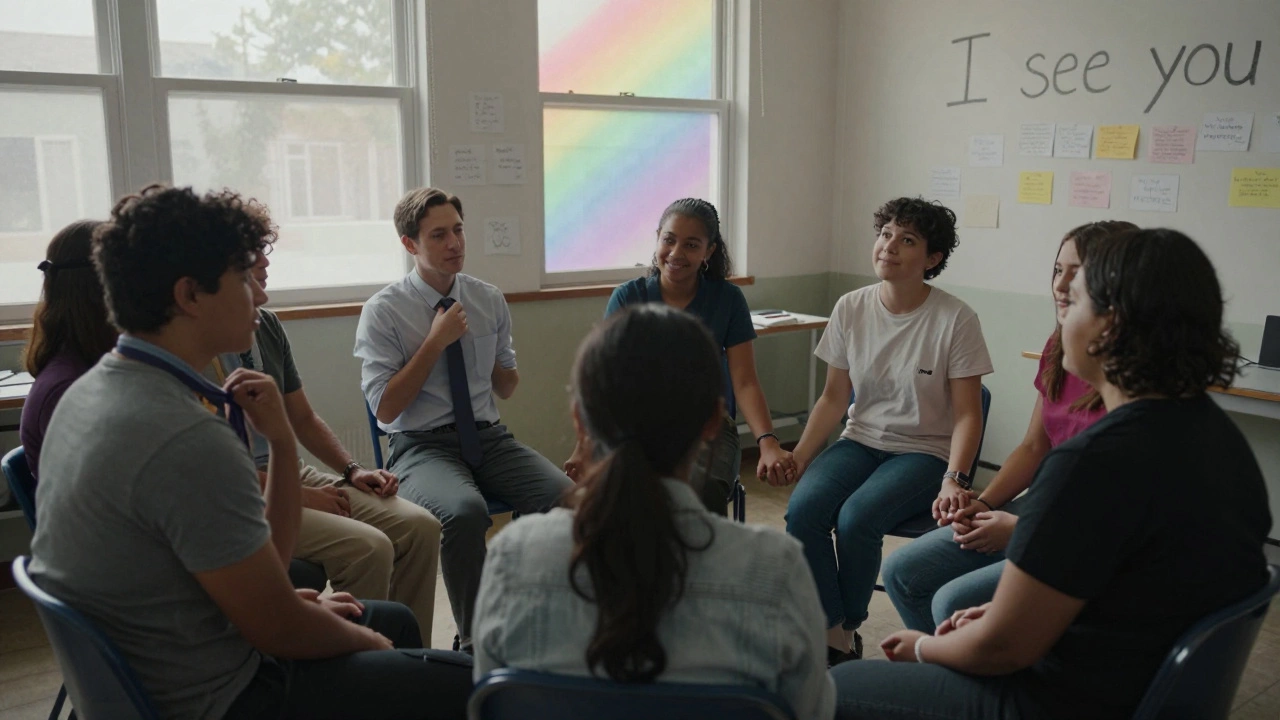
Therapists who specialize in gender identity are rare and expensive. Online communities help, but they can’t replace real human connection. Finding a local support group - even one that meets in a church basement or a library room - can be life-saving. And sometimes, just hearing someone say, ‘I came out twice too,’ is enough to keep you going.
For those who are still hiding, know this: you don’t have to do it all at once. You don’t have to be ‘ready.’ You don’t have to explain yourself to anyone. You just have to survive until the day you feel safe enough to speak.
When the World Doesn’t Change
Not everyone gets a happy ending. Some people lose their families. Some lose their jobs. Some lose their homes. Some lose their will to keep going.
And yet, people still come out. Twice. And sometimes, a third time - when they realize they’re agender, or genderqueer, or something the world hasn’t named yet.
That’s the quiet revolution. Not in protests or headlines. But in quiet moments: a teenager whispering their name to a mirror. A parent learning to say ‘they’ without stumbling. A coworker who stops correcting someone’s pronouns after a year of silence.
Change doesn’t always come with parades. Sometimes, it comes with a text message that says, ‘I’m still here.’
What Comes After?
After the second coming out, there’s no finish line. There’s only life - messy, beautiful, terrifying, and real. You learn to set boundaries. You learn to walk away from people who refuse to see you. You learn to find joy in small things: a haircut that feels right, a shirt that fits your body, a stranger who calls you by your chosen name without asking.
And sometimes, you find love again. Not the love you thought you wanted, but the love you needed - the kind that doesn’t ask you to shrink.
If you’re reading this and you’re still hiding, know this: you’re not broken. You’re not late. You’re not too much. You’re exactly where you need to be. And when you’re ready, the world will adjust - slowly, painfully, but it will.
For now, just breathe. You’ve already survived so much.
Some people spend their whole lives trying to be seen. Others spend theirs trying to be understood. You’ve done both. And that’s more than most ever manage.
For those who are still searching for connection in big cities, you might hear about london escort girl reviews - not because they’re about identity, but because they’re about visibility in places where people learn to survive by being seen, even if only for a moment. That’s the same hunger that drives so many of us to come out - twice.
And if you’re one of them - you’re not alone.
There are others out there. Waiting. Breathing. Holding on. Just like you.